


YYou know you are in a fashion-conscious city when the Virgin Mary wears couture from head to toe. The baroque church is located just a short distance from Antwerp’s medieval old town with its elaborate guild houses and cobblestoned streets. St Andrews. The church has many stained glass windows and a wooden pulpit that is carved in a flamboyant manner. There are also more Flemish masters’ artworks here than you could shake an incensestick at. We’re here, however, to pay tribute to a form of art that is quite different.
Ann Demeulemeester, the renowned Belgian designer, created a custom-made dress with white pigeons feathers to trim a 16th century wooden statue of Madonna. This bold statement is in keeping with the city’s love of fashion, which seems to be woven into everyday life.
It wasn’t always like this. In the 19th century this impoverished neighbourhood was known as the “parish of misery”– a reputation that endured well into the 1980s when a young designer named Dries van Noten took the plucky decision to open a shop on Nationalestraat, across the road from his grandfather’s tailor shop. Nearly four decades later, the art nouveau building with its curved glass, marble flooring and chandeliers is the heart of Antwerp Fashion District.
“You must understand that nothing existed here before this store opened.” It changed everything,” Yentl says, a local guide leading me and my daughter on a stroll around the main fashion and shopping streets in the city.
Van Noten and Demeulemeester are both members of the “Antwerp Six” – a group of bright young graduates of the city’s Royal Academy of Fine Arts who exploded on to the international fashion scene in the late 1980s. Together with their peers Walter van Beirendonck Dirk Bikkembergs Dirk van Saene Marina Yee they are credited for injecting new energy into the fashion scene that had been dominated by Paris, Milan, and London for decades.
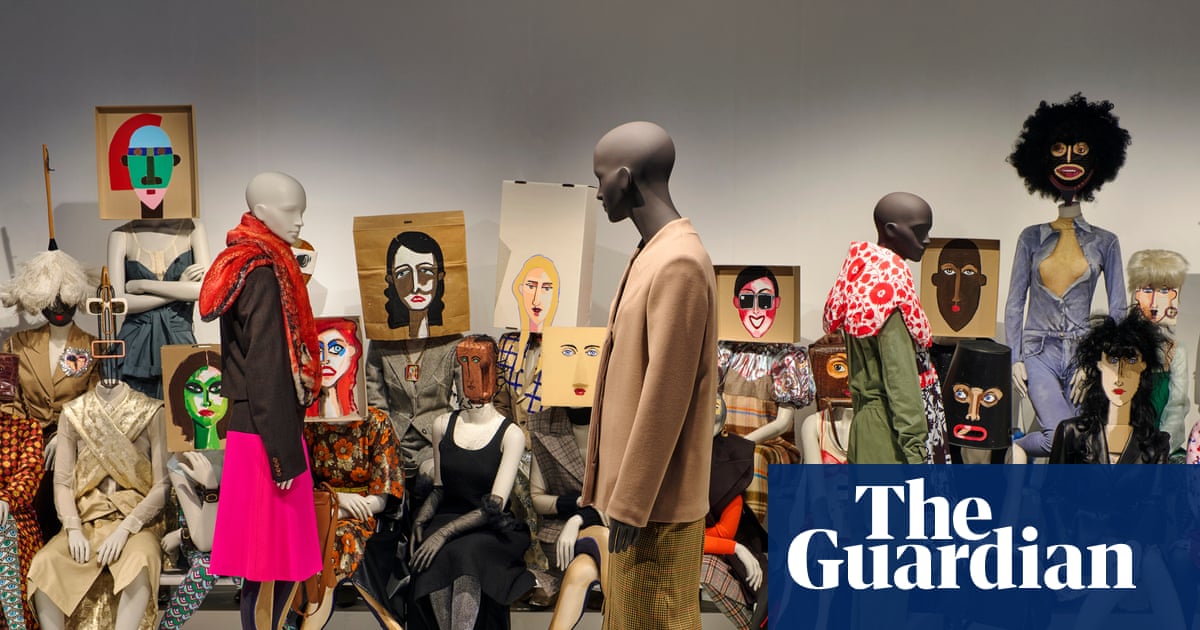
A major new exhibition tells their story at MoMuThe world-class Antwerp fashion museum is just a few steps away from Van Noten flagship store. The retrospective will run until January 2027 and marks the 40th anniversary since the group made their first trip to London, in 1986. They piled into a van, caught a ferry to Olympia from Ostend, to present their debut collection at the British Designer Show. The young Belgian designers won over the international fashion press and buyers alike with their talent, originality and chutzpah – creating their collections on a shoestring, often from upcycled materials, championing self-expression over marketability, hosting fashion shoots in abandoned car parks, and making their own flyers and posters.
The Antwerp Six were never a group. Although it was easier for foreign journalists to refer to them by their Flemish names, they weren’t a collective. It is pleasing to see each designer have their own individually curated area. Van Beirendonck’s avant-garde exuberance and Demeulemeester’s monochrome palette are both as imaginative and provocative as the clothes that they display. They combine film projections with recorded interviews and a conveyor belt of moving mannequins.
The legacy of the pioneering group lives on beyond the catwalk in the city. On Nationalestraat, contemporary designers rub shoulders alongside kilo shops where second-hand clothing is sold by weight. At Labels Inc You can find pre-loved designs by established Belgian designers like Raf Simons or Martin Margiela, as well as the latest collections of the city’s fashion graduates. The nearby streets of Kammenstraat, Steenhouwersvest and are lined with vintage shops, streetwear brands and independently owned labels. Arte AntwerpThe brand is known for its urban, sleek menswear, inspired by art, architecture, graphic design and other influences. It’s impossible to not be inspired, even if you don’t know the difference between a Bikkembergs and a Belgian Waffle.
Tim van Steenbergen says that the Antwerp Six taught him how to be an entrepreneur and to listen to his inner voice. He was an apprentice of Dries van Noten and founded a social enterprise, sustainable fashion label. ReAntwerp. “They showed us that we can change our ways if we want to.”
ReAntwerp, a company that was created to combat the massive amount of textiles waste produced by fashion designers, sells beautifully tailored, limited edition classics. These include shirts, trench coats and other garments made from leftover fabrics from Van Noten or Christian Wijnants. ReAntwerp also offers training, employment, and support for refugees who create the clothing in its on-site atelier. Van Steenbergen: “I wanted clothes that had as much value and meaning to the people making them as it did for the people buying them.” “We’ve worked with refugees in Afghanistan, Syria Pakistan, Palestine Brazil and Costa Rica. Textiles is our common language.
It’s an apt motto for a town whose prosperity was built in part on the textile trade. In the 16th century, Antwerp became Europe’s biggest river port. Cargos of English silks and English wool, along with spices and sugars from the West Indies and diamonds from India were shipped up and down River Scheldt. These riches were used to fund the intricate guild houses and civic building that surrounds the Grote Markt. It is the centrepiece of the city. Antwerp’s Port is the story told by the MAS The museum is housed in an impressively modern, 10-storey building located in the dockside Eilandje area. The roof terrace offers panoramic views of the dockyards and river. You can also sample street food from all over the world. Wolf Sharing Food Market, an old warehouse with waterside terrace.
You can see a collection of their works at the Museum d’Antiquité. A collection of their work can be seen at the Royal Museum of Fine Arts The impact of four huge Rubens altarpieces on the walls of the impressive Cathedral of Our Lady.
The artist’s house and studio There are currently major renovations taking place in these gardens. But, after an exhausting day of sightseeing and shopping it was refreshing to take a seat among the displays and flowers. Rubens’ family portraits were also found at the museum. Plantin-Moretus Former home and work place of nine generations who revolutionised the printing industry. Some of the presses date back as far as the 1600s. They produced the first atlas, numerous scientific books, and beautifully illustrated bibles. It’s a fascinating and atmospheric place with its dark panelled wall, leaded window and creaking floors.
We have just enough time to enjoy one last bolleke and a shrimp croquette in the sun-trapped square adjacent to the Hotel t’Sandt before we check out. Then we’ll hop on the tram and head to Antwerp’s Central Station for the 45 minute ride to Brussels where we’ll board our Eurostar home. The 17th century mansion, with its polished wood floors, spiral staircase, and beamed ceilings has been many things before: a banana warehouse, a custom house, a soap factory, and a sculptor’s workshop. Today it makes a perfect base for exploring the city; friendly, stylish and wears its history well … much like Antwerp itself.
The Antwerp Six Exhibition runs from MoMu The current date is 17 January 2020. Admission is €13 per adult and free for under-18s. The trip was organized by Visit Antwerp. Double Rooms at the Hotel ‘t Sandt start from €217 A night
