


Look up during the day and night to see the highlights of February. A “planet-parade” and the first solar event of the year are not the only highlights of February. You can also catch a historic crewed moon mission and the best opportunity to see Mercury.
Stargazers in the southern hemisphere may see fireballs early on in the month. You can plan your trip or simply enjoy a quiet night in the backyard based on the meteor showers that will occur in 2026. you can check out our full guide here.
Cold nights in the Northern Hemisphere continue to provide the best conditions for stargazing. Put on a warm coat. search out dark skiesEnjoy the highlights of February below.
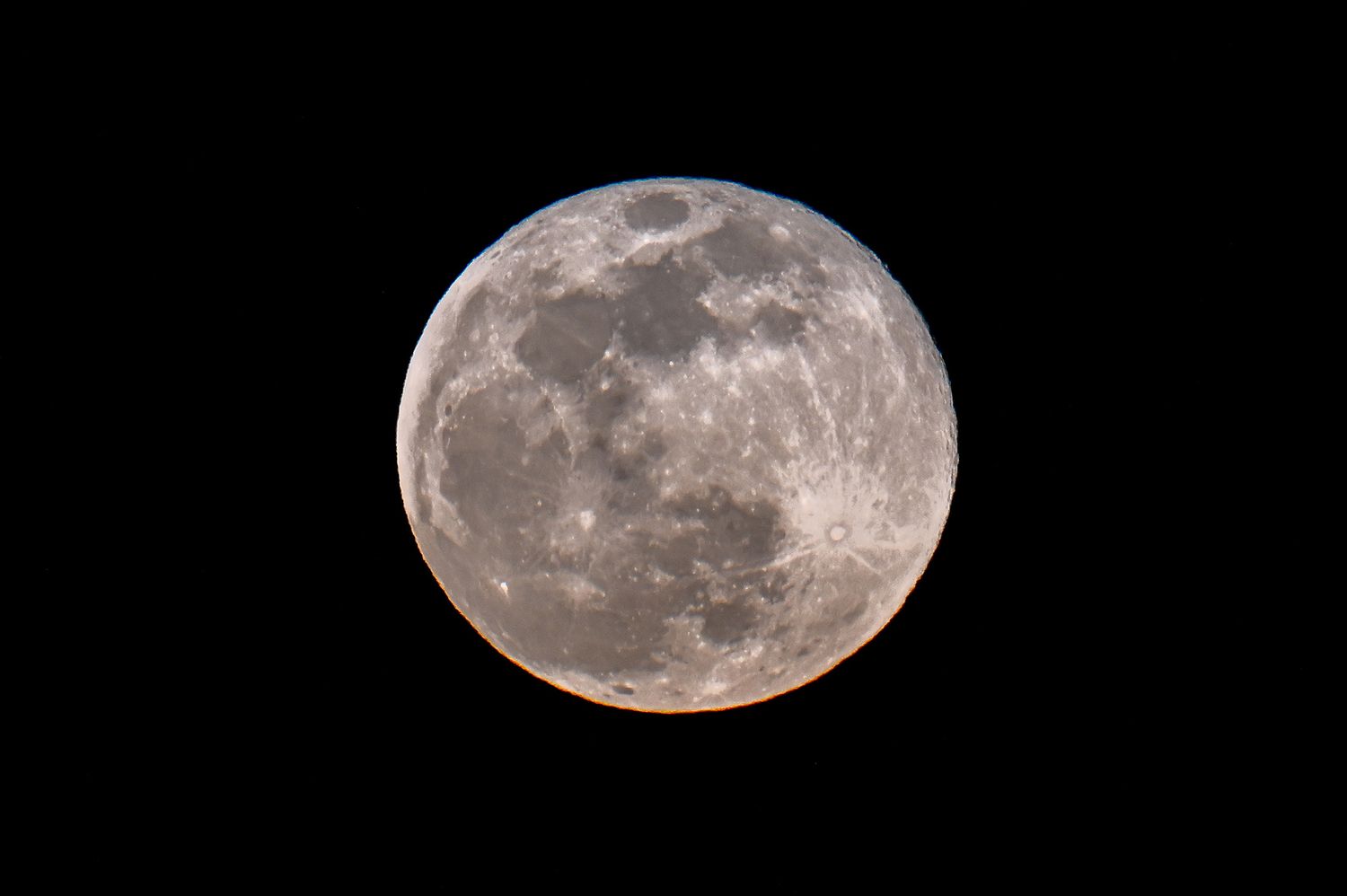
Feb. 1: The Rise of the Full ‘Snow’ Moon
The “snow-moon” full moon of February will rise on the first day of the month, casting a brilliant glow across winter landscapes in the Northern Hemisphere. Moon reaches its peak at 5:09 pm. ET, based on Astronomy.com. Most striking are the views that occur just after the moonrise when it is creeping low over horizon. A phenomenon called the “moon-illusion” can cause it to appear brighter and larger at that time. as noted by NASA. This is an excellent opportunity for budding astrophotographers to capture this illusion of the moon, especially when seen against a snowy landscape or open terrain.
NASA’s historic Moon mission window opens on Feb. 6.
Anyone who is interested in space exploration should not miss NASA’s Artemis II moon mission. It will not only be the first launch of NASA’s most powerful rocket, but also the first human space flight beyond low-Earth orbit in over 50 years. Artemis II will launch on February 6, but backup dates are available for several days afterward in the event of a need for a delay. NASA’s Orion spacecraft will be tested in deep space during the 10-day mission around the moon. This is in preparation for a planned lunar landing in mid-2027. This historic space mission is worth watching, whether you’re at the Kennedy Space Center or online.
Feb. 8-9, Alpha Centaurids Meteor shower (Southern Hemisphere).
The Alpha Centaurids may be a minor meteor shower but they are known for their quality. The shower’s rates are modest, with only a few meteors per hour. However, the rewards can be seen in the form bright, streaking fireballs. Stargazers in the Southern Hemisphere will have the best views on Feb. 8–9, when the shower’s radiant in the constellation Centaurus climbs high overhead around midnight. After midnight, the moonlight will be manageable and this is a good time to watch if you want to see one of these showers’ more dramatic streaks.
See the eerie glow of an Annular Solar Eclipse on February 17
The first solar eclipse in 2026, an annular eclipse, will occur on February 17 for those who are lucky enough to be at the right location on Earth. A “ring-of-fire” eclipse is also called an annular one when the moon reaches the furthest part of its orbit and does not cover the whole surface of sun. The edges of the sun are visible as a flaming edge around the silhouette of the moon.
If you want to see the eclipse fully, then you will need to be either in Antarctica’s remote regions or in the southern regions of Southern Ocean. The southern tip of South America, as well as southern Africa, will see a partial eclipse.
New Moon on February 17
The new moon in February, which is the phase of the Moon when it is between Earth and Sun, and therefore essentially invisible, makes for excellent conditions to view the night sky during the second half of the month. Bode’s Galaxy M81 will be one of your best targets to locate. It is among the brightest galaxies that you can find in the evening skies. Around the time of the New Moon, it will be easy to see. reaching its highest point in the sky Around midnight local time
Feb. 17: Point Your Scope at C/2024 E1 (Wierzchos)
Even though it is not expected to be bright enough to be seen with the naked eye, Comet 2024 (Wierzchos), should still visible for anyone in northern hemisphere who has a telescope and dark skies. A new moon that coincides with the comet will make it easier to see, since the moonlight won’t interfere. The comet will make its closest approach to Earth (roughly 93 million miles) on February 17 after its close pass of the sun in early January. According to Space.com, The brightness is expected to reach about 9. Use a small scope to scan southwestwards just after sunset in order to see Comet E1 on the horizon.
Mercury’s greatest eastern elongation on February 19
Mercury is usually lost in the glare of the sun, but for skywatchers in the northern hemisphere, February 19th offers the best chance to see it. The planet reaches the greatest eastward elongation on that evening. That means it will appear as far as it can in our skies for this cycle. There is a small window of opportunity to view it in twilight. Look at an open western horizon 20-40 min after sunset. Mercury will appear brightly above the horizon, slightly to the right of where the sun set.
Feb. 28: Catch a ‘Parade’ of Six Planets
It is less crowded as last February’s seven-planet paradeThis year’s constellations are still worth putting on a jacket and watching the sky in the evening. Mercury, Venus Saturn Jupiter Uranus and Neptune will appear in a cluster on the 28th of February and all follow the same path (the ecliptic) across the sky. Mercury, Saturn and Neptune will all set just after sunset, so you should head out to the skies before it gets completely dark. Venus and Jupiter should be easy to spot. Uranus, Neptune and Saturn are fainter and require binoculars.
